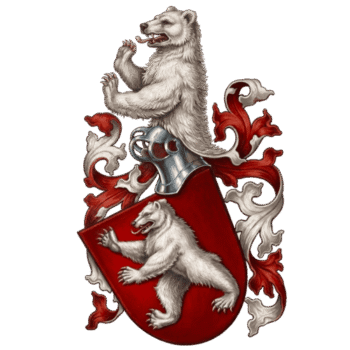
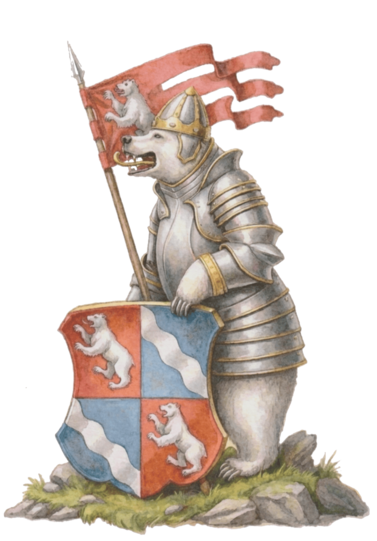
The family belongs to the ancient nobility (Uradel) of Sabia (historical region located in southwestern Germany). The first known member of the family is Kizzinus Senior de Kircheim (Kirchheim unter Teck, Germany), who appears first as a feud of the Duke Ludwig of Teck, on 5 January 1251 (see Landesarchiv Baden-W'rttemberg, W'rttembergisches Urkundenbuch Bd. IV, N. IV, N. IV, N. IV, N. IV, N. IV, N. IV, N. IV, N. IV, N. . 1182). With it they begin the more than 750 years of uninterrupted family history.
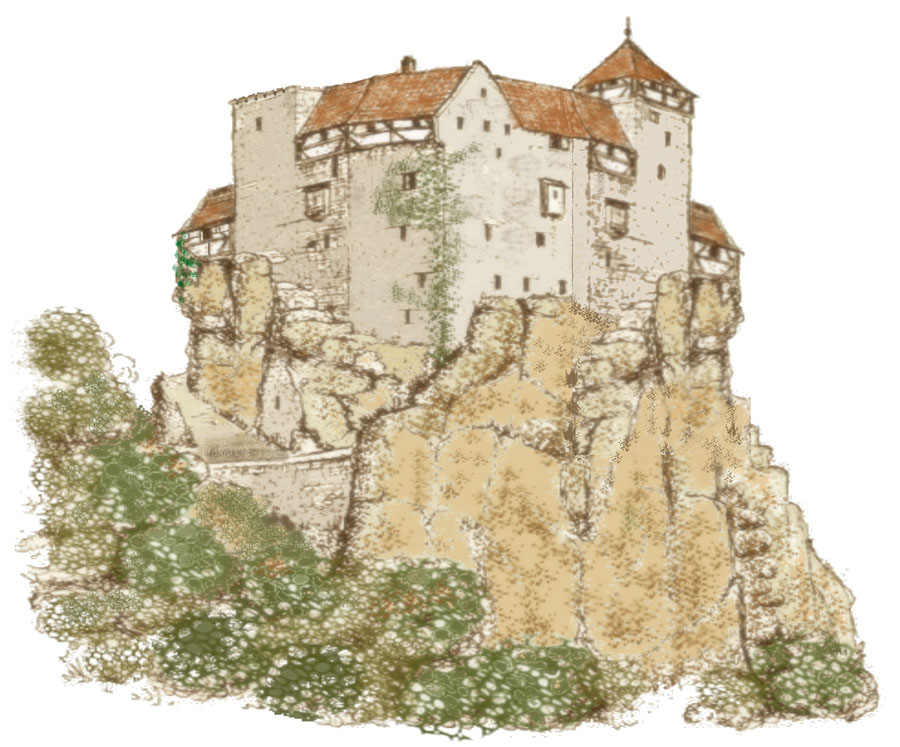
Henry (Hainricus) and Bartoldo (Berchtoldus) appear documentaryly for the first time on April 11, 1271 called Rische (milites scilicet Rischen) (see Landesarchiv Baden-W'rttemberg, W'rttembergisches Urkundenbuch Bd. VII, N, 2204), meaning "of "de" You're tough." Recia (Raetia) is the historic Roman province located north of the Alps where this family comes from. Henry and Bartoldo's brother Diethoh built Stein's castle (now Reussenstein near Neidlingen, Germany) in the late 13th century as the family's home castle.
The family was divided during the early seventeenth century into two lines, one bohemian and one Sun.
Paul received for his status as a landowner in Bohemia the recognition of membership in the nobility of the Kingdom of Bohemia with the classification of "noble of ancient lineage" by the Holy Roman Emperor Maximilian II (see the Czech National Archive, Prague: Saalbocher, entrance 12a, p. 561-565). Subsequently, his son Thomas I. received the title Lord of Rausenbach from the Holy Roman Emperor Rudolf II on 7 February 1597 (see Czech National Archive, Prague: Saalbacher, entrance 12a, p. 561-565). Tomás I. was the last ancestor in common of the two lines. His sons John and Tomás II. are the founders of bohemian and Sun's lines, respectively.
John Ferdinand (Johann Ferdinand) was economic director of Prince Lobkowicz in the Duchy of Raudnitz. He received the titular renewal of the lordship of Rausenbach, in addition to the bohemian incholate as feudal lord of Srutsch an der Sasau (today Zruc nad Sázavou, Czech Republic) and Krasanovic by the Holy Roman Emperor Charles VI, 2 May 1735 (see Saalb-chertis , input 163, p. 482-487).
On 15 April 1755, John Ferdinand was granted the hereditary rank of "Ritter" of the archduke of Austria with an increase in arms by the Empress of the Holy Roman Empire Maria Theresa in her capacity as Archduke of Austria (see Saalbocher, N. 204, N. 204 , p. 244-253).
She was succeeded by her daughter Maria Anne (1767) and all of the family's bohemian possessions passed to her husband's family, Baron Wilhelm Mac Neven O'Kelly ab Aghrim.
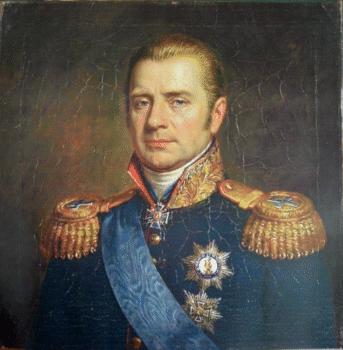
John Raus de Rausenbach-Waldach, also known as John Raus of Bavaria (1778 – 1833), son of Juan Cristian Raus of Rausenbach-Waldach is the founder of the Spanish branch of this house.
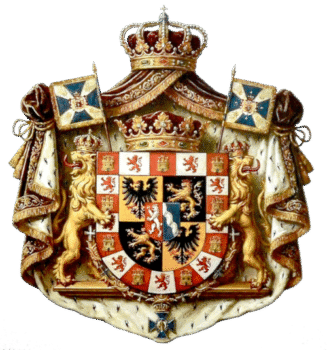
On July 21, 1822, the Duchy of Merida (male birth) and the prince of Raus were created for him and all his descendants with the treatment "Highness" by Emperor Augustine I of Mexico. The emperor also created the title of Duke of Rausenbach (male birth) and Count of Rausenbach for the firstborn son during the life of the father, on 1 March 1823.
On 29 September 1822 the first Duke of Rausenbach founded the Order of St. Michael of Rausenbach in order to preserve history and family unity, as well as to reward and promote altruistic acts according to its statutes.
Además, Juan Raus de Baviera estableció las normas de esta familia (Hausgesetze) que con algunas modificaciones siguen en vigor hoy en día.